
New China customs rules for perishable and frozen food container inspections took effect October 1, 2026. Learn the 21-day validity rule, the empty-container declaration requirement, and how to avoid shipment rejections.
China’s New Container Inspection Rules for Food & Frozen Exports: What Shippers Must Know
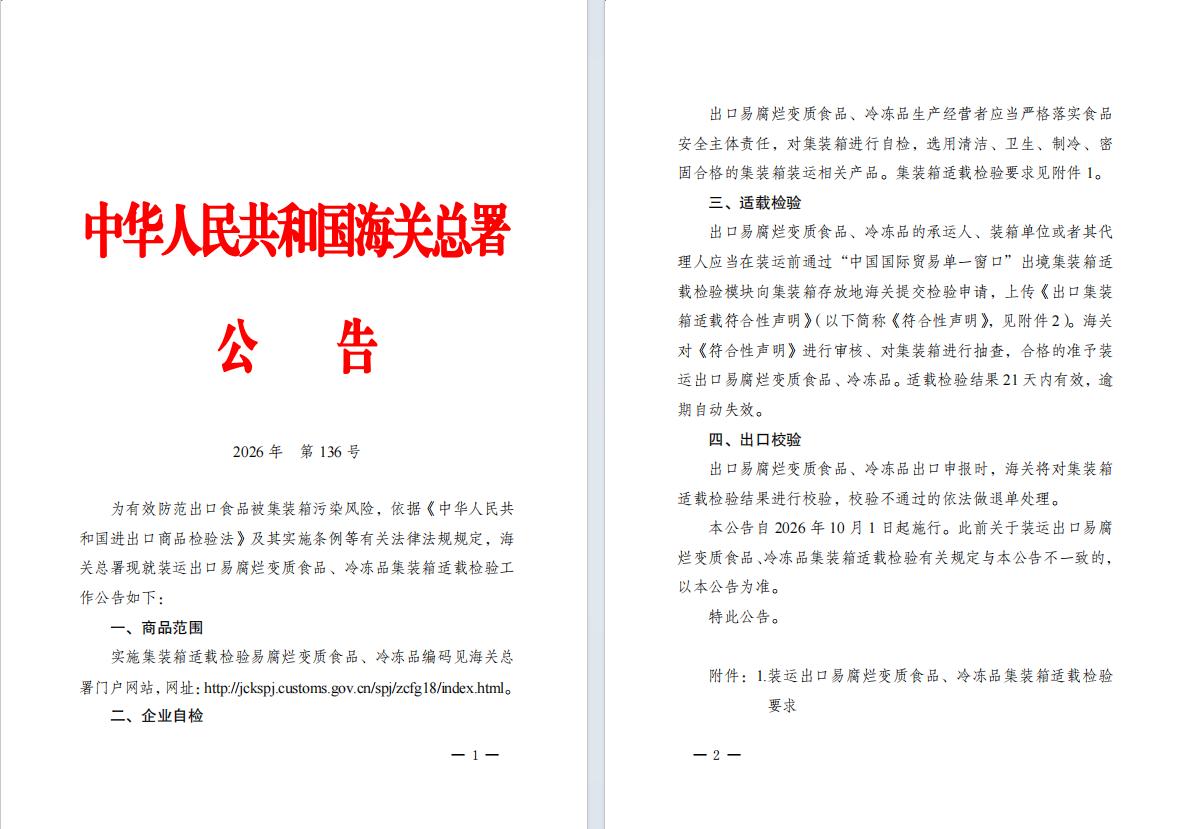
China Customs Announcement No. 136 shifted the burden of container suitability inspection from customs pre-inspection to enterprise self-declaration + customs audit. If your supplier gets this wrong, your cargo can be rejected at export, delayed, or returned. Here’s the practical guide we give our clients.
The Shift: From Customs Pre-Inspection to Self-Declaration
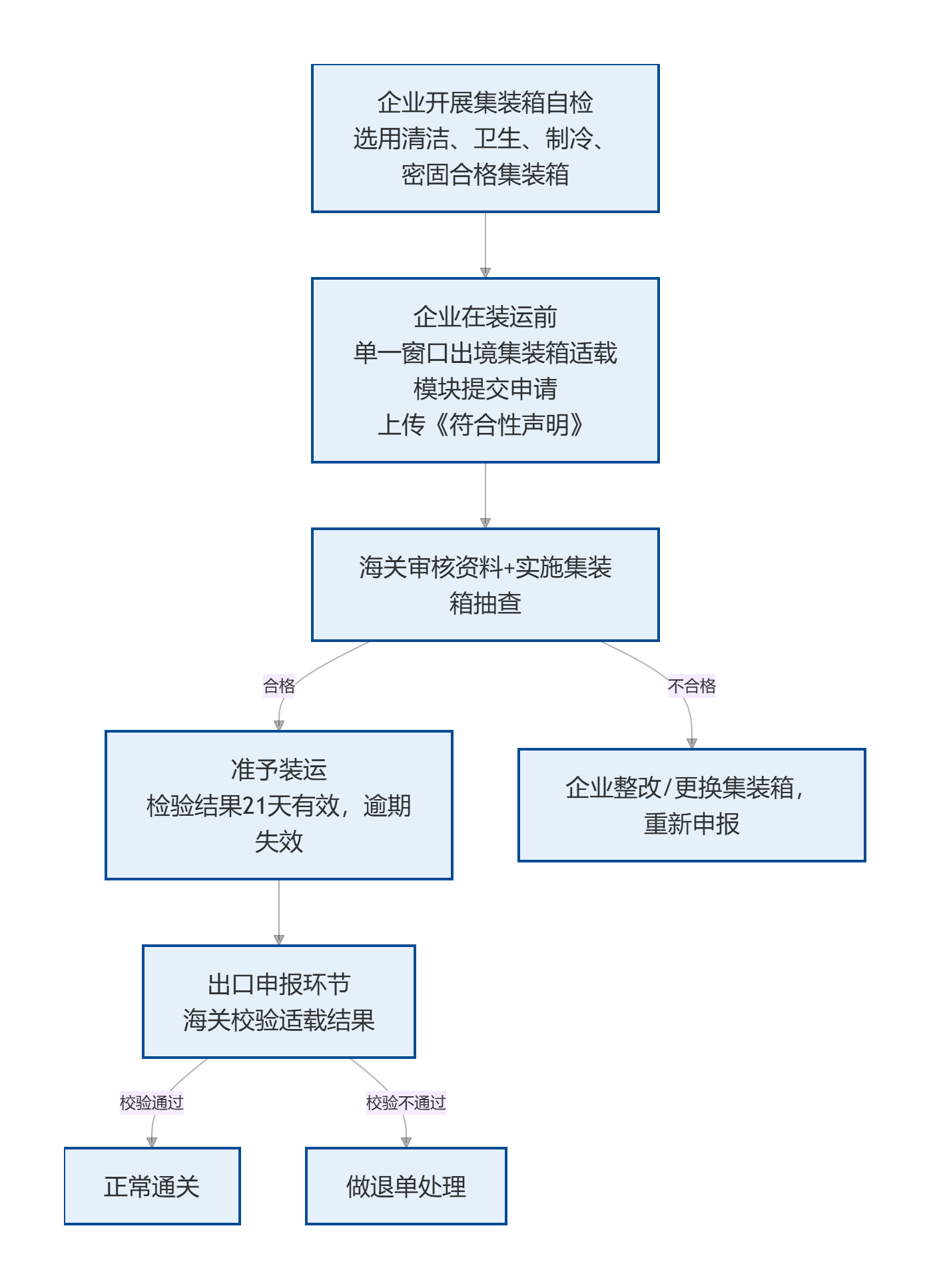
Under the old system, customs inspected containers before loading. Under Announcement No. 136 (effective October 1, 2026), the responsibility now sits with the carrier, stuffing unit, or agent in China. They must submit an Export Container Suitability Compliance Declaration through China’s Single Window before loading—while the container is still empty.
What this means for importers and buyers:
- Your Chinese supplier or their forwarder is now legally responsible for the declaration.
- A false declaration carries legal liability. If container defects cause cargo damage or rejection, customs will trace back to the declarant.
- Export declarations are automatically validated against this inspection record. No valid record = direct rejection at customs.
The 3 Deadlines You Cannot Miss
Critical Timelines That Determine Whether Your Cargo Ships
| Requirement | Detail | Consequence If Missed |
|---|---|---|
| Declare before loading | Declaration must be submitted while the container is still empty | System validation fails; export declaration rejected |
| 21-day validity | Inspection result is valid for 21 days from approval | Expired = must re-declare; vessel missed |
| Correct customs district | Submit to the customs office where the container is physically located—not the port of departure | Audit blocked; delay |
A 4-Step Checklist for Your Supplier / Forwarder
Share this directly with your China-side partners.
Step 1: Inspect the empty container before stuffing
- Interior must be dry, clean, odor-free, pest-free, and free of residue or damage.
- Reefer containers: test cooling function and temperature control in advance.
- Photograph everything. Self-inspection records and photos must be retained for customs retroactive audits.
Step 2: Sign the Compliance Declaration—accurately
- One declaration per container, per shipment batch. No reusing a single declaration across multiple containers or shipments.
- The declarant bears legal responsibility. Do not sign blindly or on behalf of someone who hasn’t actually inspected the box.
Step 3: Submit via Single Window before loading
- Portal: China International Trade Single Window → Export Container Suitability Inspection module.
- Upload the signed declaration. Customs reviews online and may conduct a risk-based physical spot check.
Step 4: Retain all records
- Inspection checklist, container photos, temperature logs (for reefer), declaration copy, submission receipt.
- Keep until the customs retention period expires. Customs can audit retroactively even if the container wasn’t physically inspected at the time.
Common Mistakes That Cause Shipment Rejection or Penalties:
| # | Mistake | Why It’s a Problem |
|---|---|---|
| 1 | Stuffing before declaring | Declaration must be done on an empty container. Loaded containers cannot be declared retroactively. |
| 2 | Declaring to the wrong customs office | Must be the container’s physical location customs, not the exit port. |
| 3 | One declaration for multiple containers | Each container and each shipment batch needs its own declaration. |
| 4 | Ignoring the 21-day clock | Declared too early = expires before export declaration. Re-do the whole process. |
| 5 | Reefer mechanical issues | Door seals, fans, defrost, temperature probes—most reefer rejections come from cooling failure. Test before stuffing. |
| 6 | Skipping self-inspection because “customs didn’t check” | Retroactive audits can still find defects. Liability stays with the declarant. |
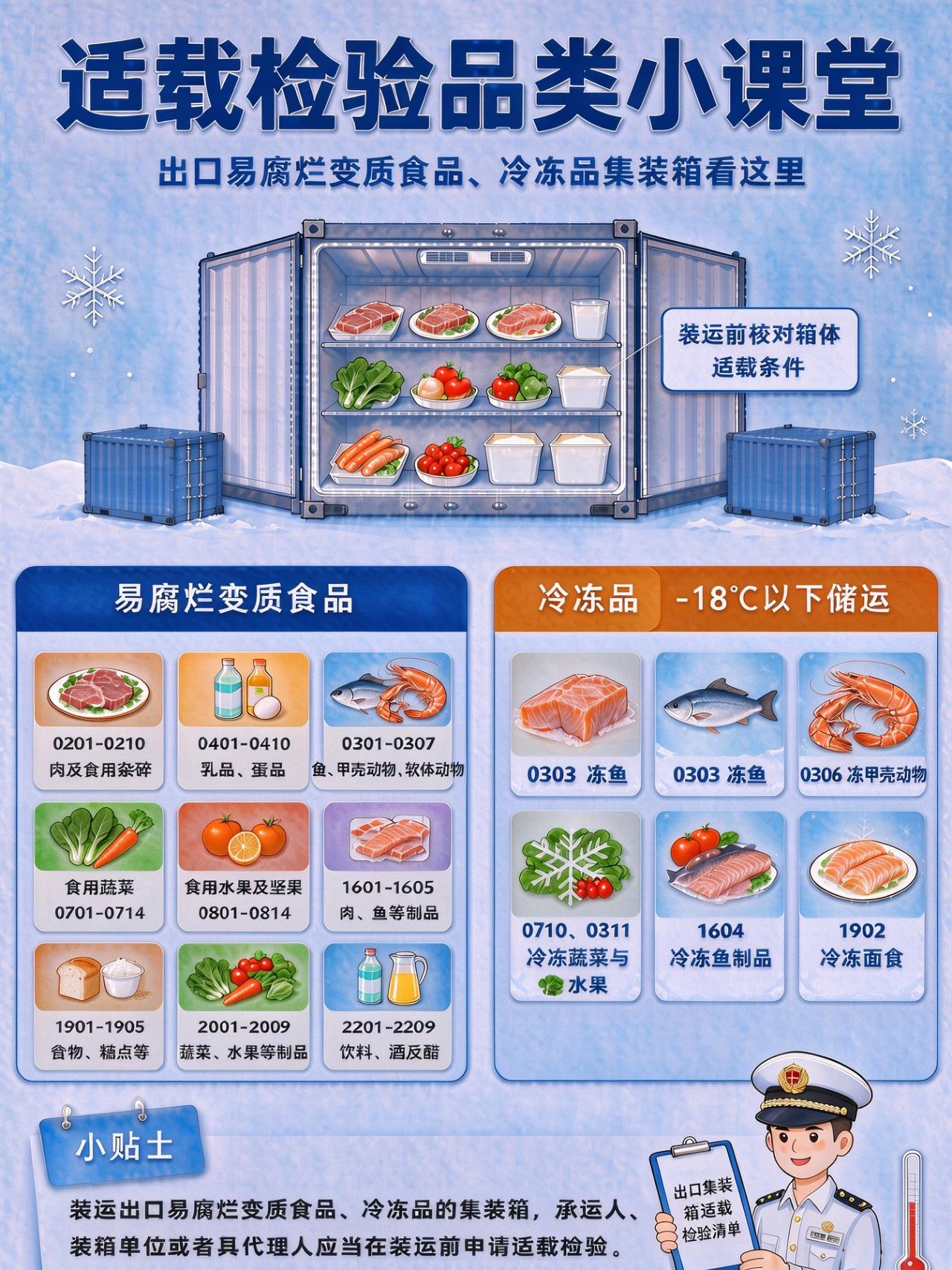
| 7 | Declaring ordinary dry containers carrying food | The rule follows the cargo, not the container type. If it’s perishable or frozen food, it needs inspection—even in a standard dry box. |
How We Protect Your Shipment from Container-Related Rejections
We’ve operated out of Taicang Port for 15+ years. When you book through us:
- Pre-stuffing container check: Our team verifies container condition and documents it with photos before your supplier loads.
- Declaration coordination: We work with the stuffing unit to ensure the compliance declaration is submitted correctly, on time, and to the right customs office.
- Reefer pre-cooling verification: For temperature-controlled cargo, we confirm the unit is functioning and record temperature data.
- Bad container swap: If a defective container is found at the gate, we arrange a free replacement within 20 minutes—before it leaves the terminal.
FAQ
Q: Does my shipment need this inspection if I’m importing frozen food from China?
A: Yes. The rule applies to containers carrying perishable food, frozen products, fresh produce, seafood, frozen meat, and pre-cooked cold-chain foods. Ordinary general cargo containers are exempt.
Q: Who is legally responsible for the declaration?
A: The carrier, stuffing unit, or their agent in China. If you’re the buyer, your supplier or their forwarder signs the declaration and bears legal responsibility for its accuracy.
Q: What happens if the 21-day validity expires before export?
A: The inspection record becomes invalid. The export declaration will fail system validation. A new inspection and declaration must be completed before the cargo can ship.
Q: Can we use the same declaration for multiple containers?
A: No. Each container requires its own declaration. Each shipment batch also requires a new submission—even for the same container on a later shipment.
Post time: Nov-04-2026