
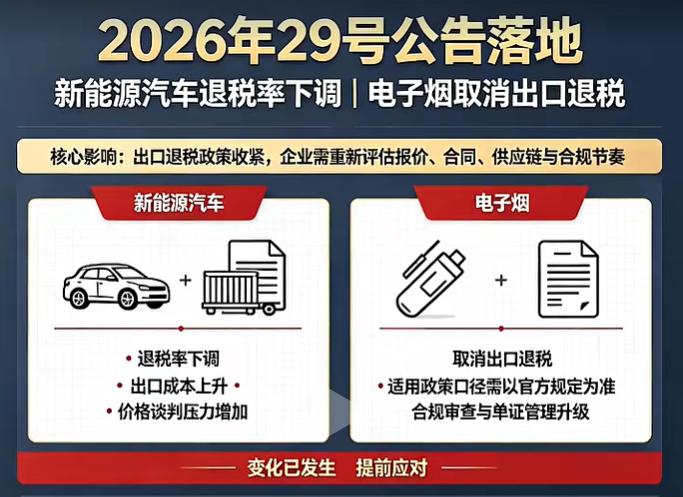
| Product Category | Current Rebate Rate | New Rate (from April 1, 2027) | Impact on Your Landed Cost |
|---|---|---|---|
| New Energy Vehicles (NEVs) | 13% | 9% | A 4-percentage-point reduction in the rebate your Chinese supplier receives |
| E-Cigarette Devices & Related Products | 13% (or applicable rate) | 0% (cancelled) | Full elimination of VAT export rebate for covered products |
This is where most buyers and suppliers get caught out. The policy explicitly states: the applicable rebate rate is determined by the export date recorded on the customs declaration form.
| Scenario | Export Date on Customs Form | Rebate Rate Applied |
|---|---|---|
| Your supplier ships the NEV before April 1, 2027 | March 28, 2027 | 13% (old rate) |
| Your supplier ships the NEV on or after April 1, 2027 | April 5, 2027 | 9% (new rate) |
The trap: Filing your rebate application early does not lock in the old rate. What matters is when the goods actually leave China and that date is recorded on the customs declaration. A shipment declared to customs in March but departing in April will be subject to the new rate.
For bonded zone exports: The relevant date is the departure date recorded on the bonded zone exit record, not the entry date into the zone.
- A 4% rebate reduction means your Chinese supplier’s effective export margin drops. In a competitive market, this may translate to higher quoted prices for post-April shipments.
- If you have confirmed orders for delivery in Q2 2027 or later, start price negotiations now. Ask your supplier how they plan to absorb the 4% gap.
- If you can realistically take delivery before April 1, 2027, prioritize production and shipping schedules to lock in the 13% rate.
- The full elimination of the rebate is more severe. Industry analysis suggests many contract manufacturers have treated the 13% rebate as part of their margin—without it, losses are likely unless prices are raised.
- Expect price increases for shipments departing after April 1, 2027. Some brands may also front-load purchases before the deadline, creating a short-term demand spike.
- If your supplier’s pricing depends heavily on the rebate, verify their post-April cost structure before committing to long-term contracts.
We’re not tax advisors, and we don’t file rebates for you. But we do the part that determines whether your shipment qualifies for the old rate or the new one: getting your cargo out of China before the deadline, with the correct export date on the customs record.
- ✔ Shipping schedule planning: Work backward from April 1, 2027 to identify the latest feasible booking and sailing dates for your product.
- ✔ Customs declaration coordination: Ensure the export date on your customs declaration is accurate and reflects the actual departure, not a premature filing date.
- ✔ Port-level execution: From Taicang Port, we manage the handoff between your supplier, the carrier, and customs so there’s no gap between “declared” and “departed.”
Whether you’re moving NEVs, e-cigarette components, or any product affected by the rebate change, the export date on your customs form is what counts. Let us help you plan the logistics side—so your cargo leaves China on the right side of the deadline.
Check your HS code against the announcement attachments to confirm whether your specific product is covered.
Post time: Nov-06-2026