
Understanding the rules is the fastest way to clear customs.
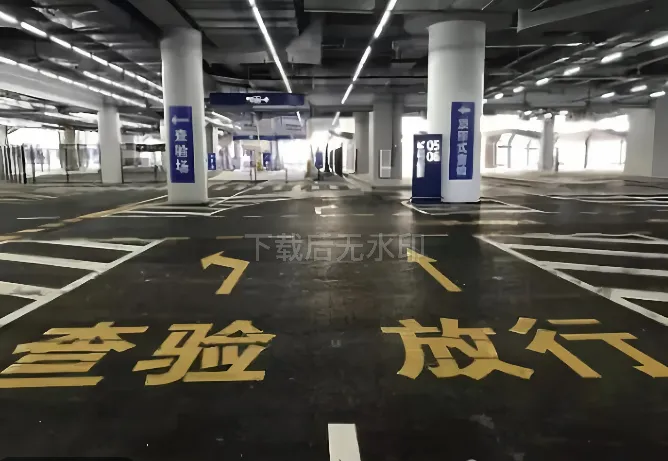
For companies in cross-border trade, the most gut-wrenching moment is when your phone buzzes with three words from your freight forwarder: “Your cargo is held for inspection.”
What follows is a familiar nightmare: the container stuck at the port, demurrage and destuffing fees piling up, delayed shipments leading to customer claims… Every second eats away at your already thin profit margins and erodes hard-earned trust.

Many chalk it up to “bad luck.”
But the truth might surprise you: In today’s era of smart customs, there are almost no purely “random” events. Behind every inspection is a rigorous logic system and a clear risk profile.
Today, we’re skipping the theory. We’ll dive directly into the latest customs regulations and real-world cases to help you fully understand what the customs “eye” is really looking for. Only by avoiding the “red flags” that trigger inspections and making good use of facilitation policies can you truly achieve fewer obstacles and faster customs clearance.
I. A Mindset Shift: Inspections Aren’t “Harassment,” They’re a “Filter”
Modern customs have long moved past the inefficient model of “manual inspection of every container.” We’ve entered an era of “data-driven + intelligent analysis + categorized supervision.”
The moment your broker clicks “send,” two “superbrains” at the General Administration of Customs—the Risk Prevention and Control Center and the Tax Collection and Management Center—spring into action. In milliseconds, they cross-reference massive amounts of data, assessing risk scores based on your company’s credit, your cargo’s risk level, and even current international trade dynamics.
Simply put, the essence of a customs hold is: screen out the violators, let the compliant through.
It’s not just about safeguarding national security and trade order; it’s about creating a fair and efficient environment for businesses that play by the rules.
II. Deep Dive: The Two Systems and Five Types of Customs Holds
Customs holds aren’t one-dimensional. They are enforced by two systems working in tandem:
● Risk Prevention and Control Center: Manages pre-clearance “security access” – deciding if your goods can enter.
● Tax Collection and Management Center: Handles post-clearance “tax verification” – ensuring you paid the correct amount.
The five scenarios from the Risk Prevention and Control Center are what businesses encounter most often:
1. Manifest Hold: Data Consistency is King
This checks if your manifest data matches your declaration. Any discrepancy in product description, quantity, or weight triggers an automatic alert.
○ Heads-up: If another company’s shipment of a certain product type has issues, Customs may raise the risk parameter for that entire product category. This is why you might get inspected even when you’ve done nothing wrong.
2. Pre-determined Hold: Targeting High-Risk Entities
The system scans for and applies a fixed inspection rate to first-time importers/exporters, low-credit companies, and high-risk goods (like those subject to anti-dumping duties or prone to IPR infringement).
3. Early Warning Hold: Following Policy Shifts
New national policies, specialized crackdowns (like “Operation Longteng” or “National Sword”), or even received intelligence can trigger these holds. It’s like radar, constantly adjusting its scan.
4. Discretionary Hold: The Inspector’s Judgment Call
This is core of discretionary holds. When a reviewing officer sees vague descriptions (e.g., “accessories” without model numbers) or data inconsistencies, they can manually order an inspection: “Pull it out and let’s take a look.”
5. Random Hold: Ensuring Fairness
A very low percentage of random checks is applied to all low-risk cargo. This helps Customs verify the effectiveness of its risk models. Probability is low, process is fast—consider it a lottery if you get picked.
Crucial Addition: Clearance ≠ The End
Goods being released doesn’t mean customs supervision is over. China has three Tax Collection and Management Centers (Beijing-Tianjin, Shanghai, Guangzhou) dedicated to post-clearance audits of classification, valuation, and origin. If they find issues later, a notice for additional duties can still arrive.
III. The Smart Supervision Era: “Black Tech” Speeding Up Clearance
Since the 14th Five-Year Plan, customs reforms are genuinely building fast lanes for businesses. Knowing these can save you real money.
1. Smart Inspection Platforms: Time Saved is Money Earned
Take Qingdao Customs’ “Guan Gang Tong” platform. Inspection appointments, procedures, and payments are all handled online. Logistics processing time for a single bill of lading is cut by over 6 hours. For AEO companies and fresh produce, average handling time can be reduced by 5 hours – that’s real demurrage savings.
2. “Robot Dogs” on Duty: Visible Efficiency Gains
At Ningbo Zhoushan Port, “robot dogs” are changing the game. They autonomously navigate, accurately recognize container and seal numbers, with accuracy exceeding 99%. A task that took 4-6 people over an hour can now be done by 3 robots in under 20 minutes, with fewer errors.
3. New Model for Hi-Tech Goods: From “Port Inspection” to “Factory Inspection”
This is a game-changer for sensitive goods! For vacuum-packed, temperature-sensitive items that can’t be opened at the port, Customs introduced the “Inspection Model for Vacuum-Packed and Other Hi-Tech Goods.”
How it works: Inspection moves from the port to the company’s own temperature-controlled warehouse or cleanroom.
The Impact?
Samsung Battery (Tianjin): Imported materials inspected on-site, taking less than 20 minutes total, saving $810,000 annually in “safety stock” capital.
Innolux (Ningbo): After enrollment, shortened the customs clearance cycles by over 15 days per year, reducing port detention fees by over 3 million RMB.
This model now covers all ports nationwide and extends to exports. If you qualify, apply now!
4. LCL Cargo: “Inspect First, Stuff Later” – End the “One-Hold-Holds-Up-All” Nightmare
The biggest fear for LCL shipping? “One ticket inspected, the whole container delayed.” Now, a new model allows LCL cargo to be inspected before consolidation. Cleared goods proceed directly to stuffing and shipping; held goods go to a separate area for inspection. No interference.
After implementation at Xi’an Railway Port, export customs time was slashed to a minimum of 48 minutes, saving companies an estimated 30 million RMB annually in logistics costs.
IV. Practical Guide: What to Do If You’re Held? How to Reduce Your Chances?
Standard Actions After a Hold:
1.Don’t Panic, Verify: Does your declaration match the actual goods? If yes, just cooperate.
2.If You Spot an Issue, Communicate: If you find discrepancies, discuss补救 measures and explanations with your broker before the inspection. Don’t wait until the container is opened.
3.Know the Costs: Customs does not charge inspection fees! You pay the port for moving and opening containers. Scrutinize the bill.
The Mantra for Lower Inspection Rates: Precision Compliance
● Declare in Detail: Avoid vague terms like “gifts” or “parts.” Include model numbers, specifications, materials. Ensure documents align with each other and with the actual goods.
● Maintain Good Credit: Your customs credit score directly impacts your inspection rate. Dishonest companies get checked every time. AEO certified companies face far fewer inspections and enjoy green channels.
● Follow Policy: Pay attention to customs announcements and crackdowns. For IPR-sensitive goods, register your IP with Customs in advance. Keep required docs like dangerous goods certificates and test reports handy.
● Internal Audit is Key: Implement a “preparer + reviewer” dual-check system. Don’t let carelessness cause major problems.
V. Policy Dividends: Don’t Wait, Apply If You Qualify!
Facilitation policies aren’t given out randomly; you apply for them. Take the most practical Inspection Model for Hi-Tech Goods. The requirements are clear:
Core Conditions:
1.Destination of imported goods and company registration are in the same customs district.
2.Company is a hi-tech manufacturer/processor or their dedicated trading firm.
3.Customs credit rating is not “dishonest.”
4.Average inspection detection rate over the last 3 years is not higher than the district average.
Application Process:
Prepare business documentation, qualification proofs, a recommendation from local government, and a list of goods. Submit to your local customs. After evaluation and filing with the General Administration, you’re “in the system.” When exporting, simply select the attribute “41. Vacuum-packed and other hi-tech goods” on the Single Window platform to trigger the dedicated inspection process.
Final Word: Compliance + Smart Use of Policy = True “Speed”
The logic of customs holds boils down to a few words: Risk-oriented, categorized supervision.
For violators, it’s a precision tool. For the compliant, it’s an efficiency accelerator.
Instead of nervously betting on “luck” every time, take the time to understand the rules. Integrate compliance into the DNA of every document. Turn policy dividends into tangible competitive advantages. Understanding the rules is the key to using them well; grasping policy is how you navigate the waves of globalization smoothly and successfully.
Post time: Mar-16-2026