
Effective June 1, 2026 — New Customs Regulation
As June 1, 2026 approaches, a far-reaching new customs regulation is about to take effect – General Administration of Customs Announcement No. 57 of 2026 (Announcement on Carrying out the 2026 Random Inspection of Import and Export Commodities Outside Statutory Inspection) will be officially implemented on that date.
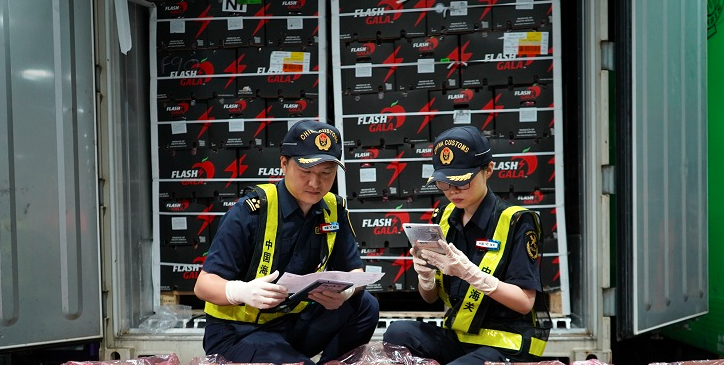
The core change of this new regulation is: Customs will conduct regular random inspections on certain import and export commodities that are outside the scope of statutory inspection.
In the past, many companies believed, “My product is not on the statutory inspection list, so I don’t need to worry about customs inspection” – this perception is about to be broken. Under the new regulation, even if your product is not subject to statutory inspection, as long as it is included in the annual random inspection commodity catalog, it may be “selected” by customs for quality and safety testing.
Consequences of failing a random inspection: At the mild end, technical processing under customs supervision may be required; at the severe end, the goods may be ordered to be returned or destroyed, directly affecting export costs and customer credibility.
I. Key Export Random Inspection Targets: Just These Two Categories (Must Self-Check)
Infant and Child Products High Risk
Includes:
- Baby bottles, nipples, children’s toys
- Infant and child clothing, strollers, safety seats
- Student stationery, etc.
Risk Points: Safety, heavy metals, phthalates, small part detachment, flame retardancy.
Low-Voltage Electrical Apparatus Frequently Inspected
Definition: AC ≤ 1000V / DC ≤ 1500V
Includes:
- Switches, sockets, plugs
- Circuit breakers, power strips, distribution box components, etc.
Risk Points: Electric shock protection, fire resistance, flame retardancy, insulation, ground protection.
In a nutshell: If you export infant/child products or low-voltage electrical apparatus, starting June 1, it’s effectively “semi-statutory inspection” – you must prepare documentation as if for statutory inspection.
II. Sampling Locations: Entirely Random, Not Fixed (Don’t Take Chances)
According to the supporting Measures for the Administration of Random Inspection of Import and Export Commodities:
Port sites (docks, container yards, supervised warehouses)
Enterprise warehouses, factory shipping areas
Inside containers, before/after loading
Cross-border e-commerce warehouses, consolidation warehouses
No fixed locations, no advance notice, random checks at any time – opening containers, sampling, and sending for testing.
III. What Do Enterprises Need to Pay Most Attention To? (4 Key Points)
1) “Non-statutory Inspection” is No Longer a “Get Out of Jail Free” Card
Before Not on statutory inspection list = basically no inspection.
Now Regular random inspections + high-risk targeting + direct return/notification upon failure.
Now Regular random inspections + high-risk targeting + direct return/notification upon failure.
2) No Test Report = High Probability of Detention
When conducting random inspections, Customs will require:
- National standard / international standard test reports
- Product standards
- Nameplates, instruction manuals
- Safety warnings
No report, expired report, incomplete test items, or non-CNAS/CMA accredited lab → direct failure determination.
3) Entire Shipment Risk: One Failed Item Affects the Whole Shipment
Failed sample → entire shipment suspended from release, full shipment re-inspection, or even return – huge losses.
4) Record Traceability: Direct Link to Enterprise Credit
Random inspection records enter the customs credit system:
Repeated failures → downgraded credit rating, intensified inspections, even affecting tax rebates and clearance facilitation.
Repeated failures → downgraded credit rating, intensified inspections, even affecting tax rebates and clearance facilitation.
IV. Consequences of Failing a Random Inspection: Worth Taking Seriously
According to the Measures for the Administration of Random Inspection of Import and Export Commodities, the handling of random inspection results is as follows:
| Result | Handling Method |
|---|---|
| Pass | Export permitted, normal clearance |
| Fail (technically treatable) | Technical processing under Customs supervision → re-test and pass → export permitted |
| Fail (untreatable) | Export not permitted – must be returned or destroyed |
Special note: Once a random inspection determines a failure, not only will this shipment fail to export, but the company’s credit record will also be affected, and the probability of being targeted for future inspections may increase significantly.
Therefore, rather than passively waiting for random inspection results, it is better to proactively ensure quality compliance and eliminate risks before shipment.
V. Therefore, rather than passively waiting for random inspection results, it is better to proactively ensure quality compliance and eliminate risks before shipment.
1 Therefore, rather than passively waiting for random inspection results, it is better to proactively ensure quality compliance and eliminate risks before shipment.
- Create a list: product name, model, applicable standards, test report validity period
- Mark high risks: small toy parts, infant/child clothing flame retardancy, socket insulation / fire resistance
2 Complete Compliance Reports (Before June 1)
Priority testing:
- Infant/Child Products: GB 6675 (toys), GB 31701 (infant/child clothing), food contact standards
- Low-Voltage Electrical Apparatus: GB 7251, GB 16915, GB 2099
Laboratory requirements: CNAS/CMA accredited labs; reports must cover key items such as safety, flame retardancy, insulation, heavy metals, etc.
3 Full-Chain Product Compliance (Nameplate / Manual / Warnings)
- Nameplate: Model, specifications, voltage, manufacturer, applicable standards
- Manual: Chinese + English, clear safety warnings
- Infant/Child Products: Age warnings, small parts warnings, choking hazard warnings
4 Allow Random Inspection Time in Shipment Planning – Don’t Cut Vessel Schedules Too Tight
Recommendation: Prepare goods 7–10 days earlier than originally planned to avoid missing vessel schedules or incurring high demurrage charges due to unexpected random inspections.
5 Establish Internal Random Inspection Records + Supplier Quality Lockdown
- Retain for each shipment: contracts, invoices, test reports, photos, factory inspection records
- Upstream factories: tighten quality control, lock down critical materials, never release non-compliant goods
Summary
Starting June 1, exports of infant/child products and low-voltage electrical apparatus will enter an era of regular random inspections.
No test report = high probability of detention. Sampling locations are random and fully traceable.
Compliance is not a cost – it is the bottom line. Proactively prepare reports, implement standards, and control quality to ensure smooth clearance and minimize losses.
Post time: May-18-2026