
Recently, many clients have been asking the same question: Does my CNC machine tool require an export license for dual-use items when exporting?
Many companies assume that ordinary 2-axis or 3-axis machines do not require a license, and only 5-axis machines do.
Today, Customs and the Ministry of Commerce strictly assess machine tools based on precise parameters, number of axes, accuracy, and processing capabilities. Different types of machine tools have completely different criteria. Once your machine parameters cross the red line and you export without a license, the consequences are severe: cargo detention, return, heavy fines, and downgraded corporate credit.
In this article, we break down lathes / milling machines / grinding machines / machining centers / multi-function composite machines and provide you with a set of assessment criteria, red-line thresholds, the license application process, and common misunderstandings. We hope this helps you avoid pitfalls and ensure smooth customs clearance.
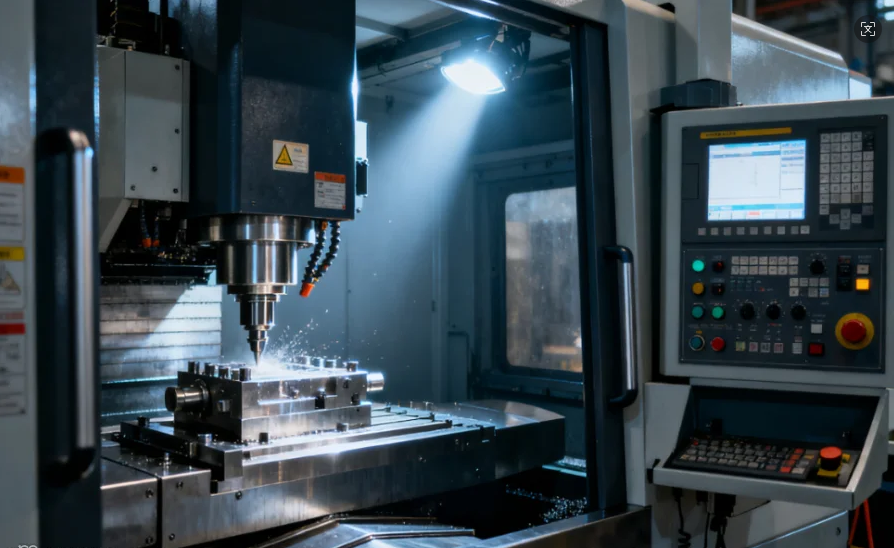
I. The Fundamental Logic: Why Are CNC Machine Tools Controlled?
CNC machine tools are classified as dual-use items (civilian and military) and are listed under the core code 2B201 in the Dual-Use Item Export Control List.
As long as the machine can process metal / ceramics / composite materials and possesses 2-axis or more simultaneous contouring control capabilities, it enters the regulatory purview.
The assessment is not based on brand, price, or whether it’s for civilian or industrial use. It focuses on four official hard indicators:
If your machine hits any of these control thresholds, you must apply for a Dual-Item Export License in advance. Starting in May, new “Control Identification Codes” and “Control Declaration Elements” have been added to customs declarations, and the system automatically screens for risks – any concealment or misdeclaration will trigger an inspection.
II. Type-Specific Assessment: Which Machines Need a License and Which Don’t
1. CNC Lathes | Strictest Criteria (Both conditions must be met to require a license)
- Maximum machining diameter > 35mm
- Under ISO230-2, positioning accuracy after all compensation better than 6μm (less than 0.006mm)
Only for bar-only automatic lathes that meet both of the following:
- Maximum bar diameter ≤ 42mm
- No chuck mounting structure, only bar feeding capability – cannot clamp workpieces.
- Bar-only automatic lathes: bar diameter ≤ 42mm, cannot mount a chuck, only through-bar feeding
- Ordinary economical CNC lathes with machining diameter ≤ 35mm or positioning accuracy ≥ 6μm
2. CNC Milling Machines / Vertical Machining Centers | Any single condition triggers license requirement
If any one of the following conditions is met, a license is required:
- ISO230-2 compensated positioning accuracy better than 6μm
- Equipped with 2 or more rotary contouring axes (A/B/C axes)
- Capable of 5-axis or more simultaneous contouring control
Large, low-accuracy milling machines with X-axis travel > 2 meters and positioning accuracy > 30μm are not subject to control.
3. CNC Grinding Machines
A license is required if any one of the following conditions is met:
- ISO230-2 compensated positioning accuracy better than 4μm
- Equipped with 2 or more rotary contouring axes
- Capable of 5-axis or more simultaneous contouring control
For ordinary cylindrical grinding machines, internal grinding machines, etc., with the following limitations:
- Maximum workpiece outer diameter / length within 150mm
- Jig grinders with Z/W axis accuracy not better than 4μm are outside control scope
4. EDM / Wire-Cutting Machines
If equipped with 2 or more rotary contouring axes and capable of multi-axis simultaneous contouring control → directly subject to control, license required.
5. Turning-Milling Composite / Multi-Function Machines
Official Rule: The whole machine is assessed by its highest capability standard.
If any single function (turning, milling, grinding) meets the control threshold, the entire machine must have a license. You cannot claim exemption based on other ordinary functions.
6. Machine Types Explicitly Exempt from License
- Simple single-axis CNC equipment without multi-axis simultaneous contouring capability
- Special-purpose machines dedicated to machining gears, crankshafts, tools, or extrusion screws (officially exempted categories)
- Large ordinary milling machines that meet both travel and accuracy exemption criteria simultaneously
III. Key Professional Reminders (in control list terminology, essential for declaration)
- Accuracy must be assessed based on ISO230-2 standards with full compensation applied – not just manufacturer’s advertised parameters.
- “Contouring control axes” are not the same as ordinary motion axes – customs classification must follow 2B201 definitions.
- Parallel-structure 5-axis machines are directly subject to control with no exemption.
- Control applies not only to complete machines but also to matching CNC systems, dedicated control software, and related technology.
IV. Control applies not only to complete machines but also to matching CNC systems, dedicated control software, and related technology
- Customs declaration rejected directly, cargo detained at port, export prohibited.
- Forced return, incurring high demurrage, container rental, and logistics penalty fees
- Customs administrative penalties and fines
- Enterprise in the blacklist, subsequent inspection rates skyrocket, AEO certification affected
V. The Fastest 3-Step Self-Assessment (Must-Do Before Shipment)
VI. If a License Is Required, What Is the Process?
VII. How We Can Help You?
As a professional international logistics and customs compliance team, we provide:
For CNC machine tool exports, the key is not whether it is “CNC,” but its accuracy, number of axes, and processing range. Many seemingly ordinary 3-axis machines can accidentally cross the regulatory line and become controlled items if their parameters happen to meet the thresholds.
Spending a few minutes on a compliance assessment before shipment is far more cost-effective than dealing with detention, fines, and returns afterward.
If you are unsure about any model, simply send us the machine model + specifications, and we will help you make a determination for free, ensuring compliant and worry-free export.
Post time: May-15-2026